
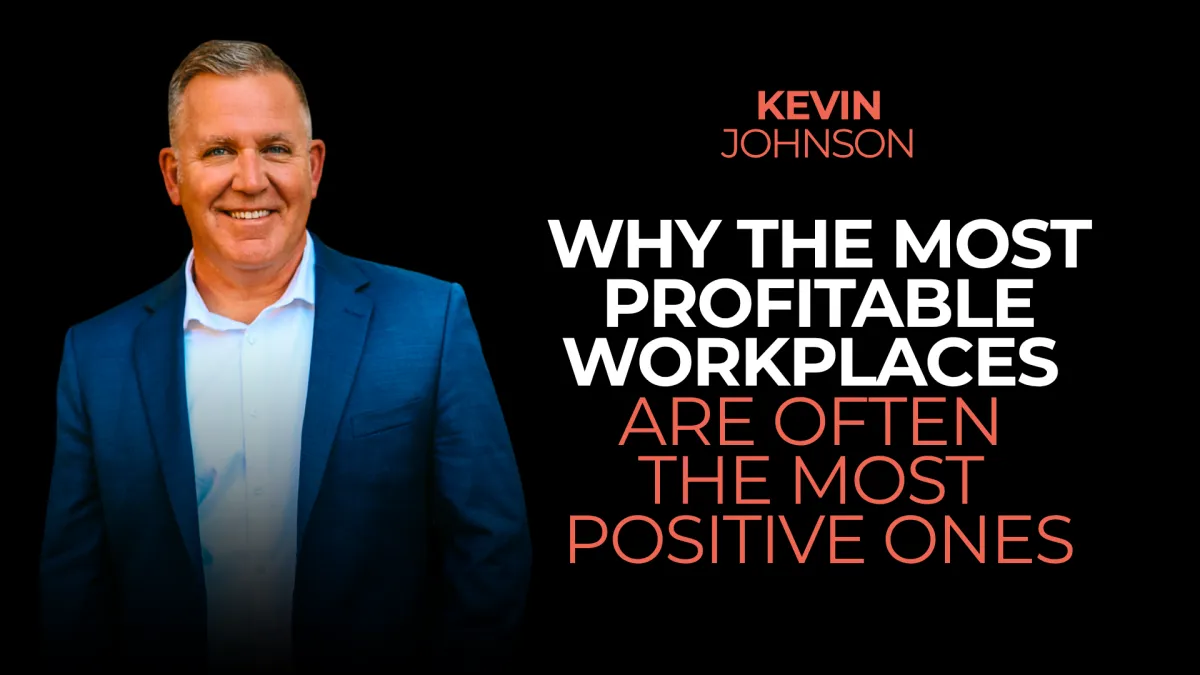
Why the Most Profitable Workplaces Are Often the Most Positive Ones
Many leaders spend a surprising amount of time talking about negativity inside their organizations.
They talk about gossip. Complaints. Poor attitudes. One or two individuals whose energy seems to drag down the rest of the team. Eventually the conversation turns into frustration about culture and how difficult it is to manage.
What I have learned after more than 25 years advising service based entrepreneurs and leadership teams is that most organizations are diagnosing the problem incorrectly.
Leaders often believe their job is to eliminate negativity.
In reality, the real leadership responsibility is to design an environment where positivity becomes the operational standard.
Negativity rarely disappears because it is suppressed. It disappears when something stronger replaces it.
When leaders intentionally structure a positive workplace culture, something interesting begins to happen. The business becomes more profitable.
That connection between positivity and profitability is often overlooked, but it shows up consistently in real organizations.
The Core Insight: Culture Drives Financial Performance
Many leaders treat culture as a soft topic.
They see it as something related to employee happiness or morale. While those things matter, culture has a much more direct impact on the economics of a business.
Negativity inside a workplace creates predictable outcomes.
Productivity decreases.
Communication weakens.
Gossip spreads.
Turnover increases.
Every one of those issues has a financial cost.
Replacing employees requires recruiting, interviewing, training, and lost productivity. Disengaged employees produce less output and make more mistakes. Poor communication slows down operations and decision making.
Negativity quietly drains profitability.
The opposite is also true.
When a workplace is structured around positivity and productivity, the financial benefits become clear.
Employees stay longer.
Teams collaborate better.
Energy improves.
Customers notice the difference.
The result is stronger performance and stronger margins.
The Leadership Principle: What You Give Oxygen To Grows
One principle I frequently discuss with leaders is simple.
Whatever you give oxygen to grows.
If the daily environment inside an organization revolves around complaints, frustrations, and problems, those things gain attention and momentum.
If leaders intentionally give oxygen to progress, improvement, collaboration, and appreciation, those behaviors begin to multiply.
This does not mean ignoring problems.
Problems should be addressed quickly and directly. The difference is that they do not become the emotional center of the organization.
High performing workplaces spend more time reinforcing what is working than dwelling on what is broken.
That shift alone changes the energy of an entire team.
Real World Application: When Positivity Becomes the Standard
When leaders intentionally structure positivity into their workplace, several predictable things happen.
First, the environment becomes more energizing.
People spend a large portion of their lives at work. When the workplace is productive and supportive, employees begin to look forward to coming in. For some people, it becomes the most positive environment they experience all day.
Second, loyalty increases.
Employees are far less likely to leave an environment where they feel valued and where their work contributes to something meaningful. Lower turnover protects operational consistency and eliminates the constant disruption of hiring and training.
Third, positivity becomes a powerful form of marketing.
Customers notice the environment of a business immediately. They notice whether employees are engaged, supportive, and collaborative. Consumers consistently choose businesses where the atmosphere feels positive and welcoming.
In competitive markets, culture can become a meaningful differentiator.
A positive workplace improves the customer experience without requiring additional marketing spend.
Addressing the Skepticism
At this point many leaders begin thinking about a familiar concern.
Some employees will never change.
That observation is often true. Every organization has individuals who struggle with negativity. Sometimes it is habitual. Sometimes it comes from challenges outside of work.
Leadership still has a responsibility to establish the standard.
The first step is giving people the opportunity to align with that standard. Many employees will respond positively when expectations are clear and consistently reinforced.
Others may resist.
Allowing chronic negativity to continue without correction sends a signal to the rest of the team that the standard is optional.
One of my clients once addressed this issue in very simple terms when speaking to employees who struggled with negativity.
“You’re going to have to get along, or you’re going to have to get along.”
The message was clear. The culture was not negotiable.
When leaders are willing to uphold that expectation, the environment improves quickly.
Often the removal of one persistent source of negativity dramatically increases the positivity of the entire team.
Who This Is For
This insight is particularly relevant for business owners and leaders who sense their culture is slowly becoming more negative than productive.
It applies to managers dealing with gossip, disengagement, or declining morale.
It applies to entrepreneurs who want to build organizations where people genuinely want to work.
In growing companies, culture becomes one of the most powerful operational systems you have. It directly influences productivity, retention, customer experience, and profitability.
Final Thought
Negativity spreads naturally.
Positivity requires leadership.
It requires intention, consistency, and a willingness to set standards that protect the environment of the organization.
When leaders design a workplace where positivity is reinforced and negativity is not tolerated, the business becomes stronger.
Teams perform better. Employees stay longer. Customers feel the difference.
And profitability improves as a result.
If you want clarity on how to strengthen your culture, improve team performance, and build an environment that supports both people and profitability, let’s talk.
Let’s talk.
Written by Kevin Johnson, CEO and Founder of Leverage Consulting.